Sunday, November 7, 2010

Left parties protest against Obama's visit in Mumbai

Left parties staged protests in Mumbai against US President Barack Obama's India visit, demanding justice for Bhopal gas tragedy victims and accusing the United States of not helping India on terrorism issue.

Activists of CPI, CPI(M), Forward Block and Krantikari Samajwadi Party demonstrated at the Churchgate station, demanding that Obama, who arrived here earlier today, return to the US immediately.

It is not an isolated case


S. DORAIRAJ(Frontline) : Interview with A. Soundararajan, CITU general secretary, Tamil Nadu.


A. SOUNDARARAJAN, general secretary of the Tamil Nadu unit of the Centre of Indian Trade Unions (CITU), has been leading workers' struggles in many industrial units, including Foxconn India.

In this interview, he expresses his views on issues such as implementation of labour laws in special economic zones (SEZs), the State government's approach to labour disputes and the determination of the workers in asserting their rights. Excerpts:

Are the country's labour laws applicable to units in the SEZs?

The Indian labour laws are applicable to industries in any part of the country, including the SEZs. The multinational corporations also have to abide by these Acts and rules.

The Central SEZ Act also makes it clear that normal labour laws are applicable to SEZs, which are enforced by the respective State governments. Though attempts were made to exempt units in SEZs from these laws, the Left parties succeeded in making the first United Progressive Alliance government incorporate this provision in the Central Act. The tragedy is that though accepted theoretically, it has not been properly enforced.

Where did the State government fail so far as the Foxconn issue is concerned?

Upon receiving the plea from the Foxconn India management on August 24 to arrange for a proper election mode to ascertain the strength of the LPF and CITU unions in the factory, the Labour Department should have immediately seized the opportunity to hold a secret ballot. Unfortunately, it failed to do so. The lack of response from the authorities betrayed the plan to instal the ruling party's union, the LPF.

If this trend continues, the State will witness a spate of struggles and agitations to assert trade union and labour rights in the industries, including the multinational corporations in SEZs.

What made the CITU enter the picture when the workers had already chosen the LPF to represent them in Foxconn India?

The workers were disenchanted with the LPF union, particularly in the wake of the untoward incident in Foxconn's Sunguvarchatram plant where several workers were taken ill in July. The workers, including some key office-bearers of the union, left the union and sought our assistance to improve their working conditions and enhance their wages. Only then we came into the picture.

Do you think that the Foxconn issue is an isolated case?

No; it is not an isolated case. There is a definite pattern in the way the government deals with labour disputes.

The successive governments in the last 10 years were very particular to see that no union was formed in the industrial units in SEZs. But the workers, owing to their bitter experiences, began forming unions, even risking their jobs. In this way, unions were started in a number of MNCs. The managements of all these units refused to recognise the unions affiliated to the CITU or to talk to their functionaries.

On seeing that workers had started moving to the CITU, the ruling party, with the support of the government, introduced the LPF unions with a view to satisfying the statutory requirement. These unions turned out to be the puppets of managements, betraying the interests of the workers.

Foxconn is a typical example of the majority of workers supporting the CITU. Now BYD, China is the new addition.

Can the Foxconn India workers, with women making up around 40 per cent of the workforce, sustain the struggle?

The management thought that the strike would fade away in a short period. Contrary to their expectations, the workers are holding on for over a month. The young women workers showed exemplary courage in the face of police action and intimidation. Actually, the Foxconn workers, through their determination, have sounded a note of caution to the MNCs in the State that they can no longer flout the labour laws. The managements' resistance will collapse like a house of cards in the face of the workers' resolve to assert their right to better wages and service conditions and the right to choose their union.

(Courtesy : Frontline Magazine)

AIDWA national convention at Motijheel from Nov 9 Read more: AIDWA national Conference at Kanpur from Nov 9 to 12


All India Democratic Women's Association's (AIDWA) national conference is scheduled to be held at Motijheel in Kanpur (UP) from November 9 to 12. It is for the first time that the national conference of AIDWA is to be held in a Hindi speaking state. Venezuelan ambasaddor Milina Centana will be the special guest on the ocassion. The Venezuela ambassador will inform the audience of the women movement in her country and their achievements.

In the inaugural session, five women from different states, who had fought against political violence, untouchability and police exploitation, would narrate their stories. A rally is organised at Ghantaghar on November 12 and Brinda Karat would address the members and volunteers at the meeting.

Friday, November 5, 2010

Let us uphold the banner of Class struggle

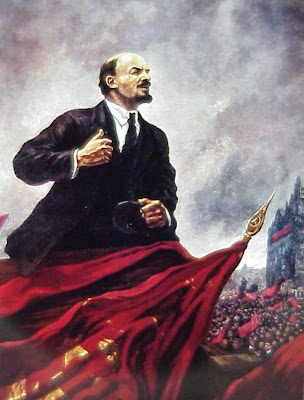
Cherishing the Memory of the Great October Revolution: A.K. Padmanabhan

This Seventh November will once again renew a lot of discussions on the great October Revolution of 1917, led by the great revolutionary Com. V.I. Lenin. Pages of history teach us that the discussions, of various kinds, had started even before the Great Revolution itself. The question of working class of a country taking over political power was very critically approached by a section of the working class movement at that time itself.

Those who had a mechanical approach to the teachings of Marx and Engels had at that time itself argued the cause of a world wide revolution! It is reminded here only to point out that debates on various aspects of October Revolution had begun even before the success of the revolution and it is not surprising that those types of debates are still continuing! It can be surely expected that these debates will be never ending!

Without going into various theoretical aspects of the great October Revolution, let us only look into the impact that was created!

Soviet Union’s great achievements within a short period, in improving the lives of the working people had attracted attention of the toiling masses all over the period. As has been noted by many, “what could be achieved by the capitalist system in 300 years could be achieved within 30 years of revolution”. The capacity of Soviet Union was proved by the epoch making victory over fascism by the Red Army of the Socialist Soviet Union in the year 1945.

The beacon light of the revolutionary movement was literally strengthening the aspirations of all the enslaved and exploited people in various countries and its full impact was felt in later years, when Soviet Union extended various kinds of help to the newly liberated countries and also to those who were fighting for their freedom.

By the early 1960s USSR was front ranking in the rate of economic growth, income, production and consumption. Socialised production and ownership instead of privatised ownership and production created this big change. The great achievements in the fields of education, health and employment, which were also ensured as basic rights was something unknown to the world. That was the only country, at that point of time, that ensured peoples’ right to live, which was guaranteed through states intervention, instead of throwing them out to the claws of the competitive market. The advances in science, art, culture etc was ensured with people’s active involvement and participation.

The rights and the social security system ensured to the working people after the revolution created the impetus for world wide changes. This fact has been agreed upon even by many of the ardent critics of USSR and its policies!

The fact that more than 20 million people gave up their lives for the cause of defending the gains of Revolution and new pages of valour and sacrifices were added to the pages of history of humanity by ordinary men and women can never be forgotten!

It was their commitment to the cause of the Revolution – the political and ideological commitment of a whole country – that ensured the historic victory in the great Patriotic War!

These achievements and advances of the USSR and further strengthening of the Socialist System with victories in Eastern Europe, formation of the Peoples’ Republic of China added strength to the determination of the people’s movements in the enslaved countries!

The change in the correlation of forces at the world level forced the imperialist forces to come forward for peace talks and also reach certain understandings on regulating or reducing nuclear arms!

One irrefutable fact was that the world was saved from a repeat of nuclear holocausts like Hiroshima and Nagasaki as USSR could catch up with the war mongering U.S. on Nuclear arms!

But while all these were happening, at the political ideological level, many deviations were taking place. In the name of correcting the wrongs done earlier, many wrong conclusions were reached. The lead that U.S.S.R could attain up to very early 60s, led to many wrong assessments on the internal and international situation. These conclusions and assessments also led to minimising or fully giving up caution against the destabilising efforts of imperialist forces and their supporters all over the world.

Internally, strengthening democracy was an important task. That was a real necessity to strengthen the Socialist system. But in the name of democracy, the Socialist system was allowed to be decimated. All these are now part of history. The way the exploiters all over the world celebrated the fall of Soviet Union and East European Socialist Countries is well known. More than anything else, the concerted attack against the ideology of the working class - Scientific Socialism – is continuing.

The last 20 years of these concerted campaigns at the international and national level have created serious crisis among the toiling masses. The theme of these campaigns has been ‘Socialism is dead; Capitalism is the last word in history; and There Is No Alternative to capitalism’. `End of history’ – theorised by Fukuyama was taken up internationally by various forces for full throated campaign.

As the ideas about Socialism and also the ideological aspects of it, was taken to the working people on the basis of great achievements of Soviet Union, the collapse of Soviet Union created a serious crisis and anti-Socialist forces could sow seeds of confusion.

Another aspect of the fall of the Soviet Union is the increasing belligerence of U.S. imperialism and its military and political interventions, in the process of asserting a unipolar world. Several of those who had not understood the political impact of the collapse of USSR, had now started debating on the issue. Some of them have even wished - if USSR was there. There are many instances where the US was unilaterally able to impose its will on other countries. It is also heartening that there are some positive developments, challenging of the U.S. diktats and also developing trends of multipolarity.

The recent developments in the capitalist world, resulting in the biggest ever crisis in the system has brought out the real face of Capitalist System and its unsustainability. The importance of the analysis of the exploiting Capitalist System by Marx and Engels, which proclaimed the inevitability of a new Socialist System, has to be understood fully. This Seventh November reminds us the task of educating our class on the historical role that has to be played by the working class, learning from its past weaknesses and failures. We have to combat the erroneous ideologies that have been spread in the aftermath of the collapse of the Soviet Union. A counter offensive by our class is the necessity of the hour! Let us prepare ourselves and organise our class to take up these challenges effectively. Let us uphold the banner of class struggle and cherish the memory of the great October Revolution!

CAG Findings Vindicate CPI(M) Charge on 2 G spectrum allotment : Sitaram Yechury


Issue
CPI (M) Charge
CAG Findings
Dimension of the Scam
Ø      “Loss due to 122 licenses for new entrants in 2008: Rs. 124,000 crore
Ø      Loss due to cross-over licenses permitted to CDMA operators (Dual Technology License): Rs. 36,000 crore
Ø      Loss due to excess spectrum occupied by the GSM operators beyond 6.2 MHz: Rs. 30,000 crore
Ø      Total Loss: Rs.190,000 crore
 
6.3 Given its scarcity value and increasing demand, a comprehensive evaluation of available spectrum was required which was not done. With the UAS policy and its subsequent amendments being implemented in a weak and indeterminate manner and with the reluctance on the part of DoT to address the issue of pricing of 2G spectrum, it was only natural that 2G spectrum was allocated at much below its value. Though the correct value of 2G spectrum allotted to 122 licences in January 2008 and the 35 licences under dual technology, also in 2008 could have been determined only by a market driven process, if adopted. However, its presumptive value, based on various available indicators, as indicated in Chapter 5 ranged between Rs. 90000 crore and Rs. 140,000 crore. In addition, the value of additional spectrum allotted beyond the contractual amount to existing nine operators, based on 3G rates works out to Rs. 36729 crore.”
(Comment: Adding the components, the total loss to the exchequer is calculated as Rs 176,379 crore.)
 
Violations of TRAI Recommendations and Overruling the Advise of the Ministry of Finance and the Ministry of Law
“The Telecom Minister was given explicit recommendation by TRAI in August 2007 (Section 2.73) that the entry fee existing then based on 2001 prices was not realistic and there was a need to “reassess entry fee through market mechanism.” Further, the PMO (your letter), Finance Ministry, Law Ministry, and internal memos of senior officials of DoT had made it clear that instead of the dubious route of “first come first served” distribution of 2G spectrum/ licenses at 2001 prices, other routes for price discovery including auction or appropriate benchmarking should be adopted.”


“I cannot accept that the PMO, the Law Ministry, the Finance Ministry and senior officials in the DoT were all ignorant of the existing policy and TRAI provisions while advising the Ministry on entry fee/spectrum charges. Notwithstanding these recommendations, the Minister went ahead with this spurious first come first served principle claiming previous policy of 2003 and TRAI recommendations as the basis of his decision.”
 
4.2 Advice of the Hon’ble Minister of Law and Justice was ignored by DoT”
 
4.2.4 Concerns of the Ministry of Finance and Finance Wing of DoT on continuance of entry fee fixed in 2001 were overlooked


 6.4 The Hon’ble MoC &IT for no apparent logical or valid reasons ignored the advice of Ministry of Law, and Ministry of Finance, avoided the deliberations of the Telecom Commission to allocate 2G spectrum, a scarce finite national asset at less than its true value on flexible criteria and procedures adopted to benefit a few operators. TRAI, the regulator also stood by as a helpless spectator when its recommendations were being either ignored or misused.”
Arbitrary Operation of First-Come-First-Served (FCFS) Policy
“There is now clear evidence that the first-come-first-served policy for award of licenses was further vitiated by entirely arbitrary operation of even this principle. The Delhi High Court Judgements of July 1 and November 24, 2009 struck down the September 25 cut-off date imposed by the Ministry on license applications as illegal, calling this change of cut-off date as “... a change in the rule after the game has begun”. Even more glaring was modifying first-come basis from the date of application for license to whoever deposits the money first with just a few hours’ notice. This was done well after the ranking of parties as per original criterion of first-come was known, and was nothing but a blatant attempt to change this ranking in favour of specific parties. This is now no longer a matter of inferences or media reports but stated in an Audit Report – P&T’s Audit Office report dated March 31, 2010. The entire exercise was nothing but playing favourites and awarding licenses to a hand-picked set of parties.”
 
4.3 Multiple Activities on 10 January 2008
On 10 January 2008 afternoon, DoT informed all eligible applicants who applied for UAS licences up to 25th September 2007 through the Press Information Bureau that they would be issued LoI. It was also mentioned in the press release that as per the policy of FCFS being followed for the grant of UAS licences, an application which is received first will be processed first and thereafter if found eligible will be granted LoI and then whosoever, complies with the condition of LoIs first will be granted UAS license. This stipulation took away the relevance of the date of application and the sanctity of the declared FCFS policy. Though the draft press release proposed to maintain the inter-se seniority of applicants based on their date of applications, if more than one applicant complied with LOI conditions on the same day, the same was withdrawn from the final press release. Thus DoT deviated from its declared FCFS policy though MOCIT maintained that it was continuing ‘with the policy (first-cum-first-served) for processing of applications’”
 
6.2 The process followed for spectrum allocation was also unfair, considering the fact that DoT did not follow its own guidelines on eligibility conditions, arbitrarily changed the cut off date for receipt of applications post facto and altered the conditions of the FCFS procedure it had been following, gave unfair advantage of certain companies over others thus creating an environment which can not be perceived as transparent and fair.”


Additional Issues that the CAG Report brings out:
 
1.   Changing of the Terms of Reference of the EGoM by the Cabinet to keep out Spectrum Pricing
 
3.2.1 Thus spectrum pricing issue was to be decided in consultation with the MoF. However, when a GoM was constituted in February 2006, its Terms of Reference (ToR) were modified at the instance of DoT to keep the issue of spectrum pricing outside its purview. Though MoF insisted for its inclusion in the Terms of Reference (ToR) for the GoM, DoT maintained that ‘spectrum pricing was within the normal work carried out by them’. The Department of Economic Affairs held the view that spectrum pricing is an issue which has far reaching consequences for the economy and needs to be debated, but this was not considered and the views of DoT prevailed in finalisation of ToR.
 
2.    Parties who were Not Eligible for award of licenses were Given licenses. 
 
4.4.2  Verification of the files of the DoT and public documents accessed from the Ministry of Corporate Affairs, Government of India, New Delhi, revealed that as many as 85 Licenses to 12 Companies, out of the 122 new licenses issued in January 2008 were granted to those which did not satisfy the eligibility conditions prescribed by DoT. While 72 licenses were given to companies which did not have the stipulated paid up capital at the time of application, 27 licenses were issued to companies who failed to satisfy conditions of main object clause in their Memorandum of Association and the share holding pattern declared by one Company did not meet DoT stipulations.”  

Wednesday, November 3, 2010

CPIM demands government intervention in Himachal truck operators strike


The Himachal Pradesh state secretariat of the Communist Party of India Marxist has strongly deplored the BJP government for its absolute smugness in the ongoing strike of truck operators in Darlaghat in Solan district. Since October 5, 2010’ all the truck operators are on strike demanding an increase in the freight charges. There have been no serious initiatives on the part of the BJP government to intervene and ensure an amicable settlement. The CPIM has stated, the Ambuja cements which now is being owned by Holcim Cements is continuing with its production from the other units in different parts of the county. Deliberately the company is buying time to break the patience of the operators especially the small ones so that it can dictate its own terms for the agreement.

The CPIM has stated, the freight formula needs to be rationalized so that the people who have lost their land for cement production can continue with their subsistence. The company intends to get rid off with the truck operators and bring big operators with large trawlers which only a few can afford. It is indeed shocking that another cement plant being owned by JP in the same district provides Rs 653 per tonne freight whereas in JP it is just Rs 478.00. The CPIM has learnt that in this period of last one month more than 3000 trucks have come to a halt. More than Rs 1 crore has been lost in this period to which both the government and the Ambuja cements owes an explanation.

The CPIM has asked for an immediate intervention from the government so that the demands of the truck operators could be met with.

Tikender Singh Panwar
Member State secretariat

Obama's visit to India only a business tour : Sitharam Yechury

CPI (M) Politburo member Sitaram Yechuri has termed U.S. President Barack Obama's forthcoming visit to India as a business tour, favorable only for the American economy.

Addressing a press conference in Visakhapatanam on Tuesday, Yechuri said: "Obama is coming to India with a business agenda. It has been outlined in a reported letter to the Prime Minister."

"President Obama is looking towards India to be a big source of investment in the United States so that they are able to get out of their economic crisis. But more importantly he has also mentioned that India must open up its domestic market for U.S.A. agricultural products. Now if that happens, that will mean the ruin of Indian agriculture," he added.

He also cautioned the Indian government about the proposed move to allow agricultural produce from U.S. to be sold in India.

Commenting on terrorism, he said that the matter relating to David Headly, a U.S. national linked with the 2008 Mumbai terror attacks case, was not handled properly by U.S. and important information was hidden from India.

"After David Headley's experience was not very good, India is also now suggesting that we should jointly fight terrorism. Yes, terrorism has to be fought globally, there is no doubt about it and there is no compromise on that. But we must be clear from where the threats to terrorism emerge and therefore on that basis India should decide," said Yechuri.

He asserted that since terrorism has emerged as one of the biggest threats in today's world, it is the need of the hour to fight it collectively.

He also accused the U.S. of being biased and selfish when it comes to sharing its scientific inventions and developed technologies with the developing nations.

"It (U.S.A.) will only share when it has some interest of its own to pursue otherwise it has never parted with technology," added Yechuri.

Demanding universalisation of PDS, Yechury said the UPA government at the Centre should have no hesitation in giving Rs90,000 crore for it when it relaxed indirect tax of Rs9.33 lakh crore for "capitalists" during the past two years.

He further said that CPI(M) would organise nation-wide agitation demanding universalisation of PDS.

Monday, November 1, 2010

CPIM rally gets huge response in Bankura


Chief minister Buddhadeb Bhattacharjee on Saturday got huge response in a rally at the troubled-torn areas in Jangalmahal, where maoists terrorists and trinamool congress have been creating problems. People came from far off places while the CM addressed the public gathering on the banks of the Gandheswari river in Bankura on Saturday. Comrade Bhattacharya criticized the railway minister over her promises for jobs, and was creating all sorts of problems by teaming up with the Maoists. "Several murders have been committed in the district. Earlier there was no problem in this place. Trinamool Congress is moving along with the Maoists, and creating troubles at places like Indus and Patrasayar. We won't let Maoists make headway." The CM appealed to the people to ensure peace in the villages. Bhattacharjee termed the Trinamool as a disruptive party. "The Trinamool are telling lies every day. It has been one year and four months now since Mamata Banerjee took over as railway minister, but you tell me how many people have got jobs in the railways? Not a single person. On the contrary, people are losing jobs," the chief minister said. Pointing at the railway factories, Bhattacharjee criticised that the Trinamool had no policy. "They are only riding on publicity. One day the people will understand which is right and which is wrong," the chief minister said. While the CM's meeting was being held, environment activist Subhas Datta also arrived at the place on Saturday to inspect how the public gathering was disturbing the Gandheswari river bank.

The Gandheswari River Bachao Committee have been complaining for the last few days that the river back was getting disturbed due to the preparations for holding the mass meeting. "Such public meetings should not be held in such river banks. I have sent letters to both the CPM and Trinamool on this. Many rivers in the state, like Saraswati, have completely dried out. Gandheswari is an important river for the people of this area and it has to be saved and protected. "We are thinking of filing a PIL on this issue," Datta said. He also spoke to the Gandheswari River Bachao Committee members on the matter.

Saturday, October 30, 2010

CPM leaders manhandled by police


The police caned CPI (M) workers in Nelloor district of Andhra Pradesh, who were protesting in front of the district collectorate against the forceful removal of CPI(M) leaders who were on an indefinite fast near Gandhi statue during the early hours of Friday. Some party leaders sustained injuries in the lathi charge.

Non-bailable cases have been filed against 23 including eight women for trespassing into the Collectorate. The leaders of CPI (M) and its mass organisations had launched an indefinite fast five days ago, demanding house sites, permanent houses, pensions and ration cards to the eligible. The fasting leaders include CITU town secretary, Mr K. Ajaykumar, DYFI town secretary, Mr Nageswar Rao, Sramika Mahila district secretary, Ms S.K. Rahena Begum, and Girijan Sangam district president, Mr B.L. Sekhar.

They demanded an assurance from higher authorities to call of their agitation on Thursday. The CPI (M) leaders warned that they would intensify the stir if officials failed to talk to them before Friday afternoon. Although Nellore tahsildar, Mr Bhaktavatsala Reddy, spoke to them on Thursday night, they were not happy since they expected the intervention of higher authorities.

Irked by the police highhandedness, a large number of party men assembled at Gandhi statue and took out a rally to stag-ed a dharna before the Collectorate . The police chased them and arrested 35 of them including party district-level leaders.

Cases have been filed  against leaders, Mr Mohan Rao, former deputy mayor, Mr Madala Venkateswarlu, former corporator, Mr Katti Srinivasulu, Mr Pulimi Sridhar, Mr Suryanarayana, Ms Arigala Ramamma and Ms Annapoornamma, among others.
Meanwhile the fasting leaders, who have been shifted to the government headquarters hospital, are being treated there.

Countrywide Protests against Obamas visit on November 8

The Left parties – the CPI(M), CPI, AIFB and RSP -- have issued the following statement:

The President of the United States, Barack Obama is visiting India. Being the first Afro-American President and coming after the neo-conservative Bush regime, there were expectations of positive changes. These, however, have not materialized.


On this occasion, the Left parties have decided to organise a countrywide day of protest on November 8, 2010. The United States, as part of its global hegemonic designs, is pursuing policies which are inimical to the national sovereignty and the people’s interests of many countries. As far as India is concerned, the United States is aggressively pressurising the government to adopt economic policies which are detrimental to the people in the name of a strategic alliance.


Contrary to the official view of the ruling establishment regarding the role being played by the United States, both globally and vis a vis India, the Left parties would like to convey the views of the vast mass of the people of India.

The Left parties will highlight the following issues on the protest being organised on November 8:


1. Justice for the victims of the Bhopal Gas accident; to make Dow Chemicals pay for the damages and for the clean up of the factory site; US should extradite Warren Anderson to India to stand trial.

2. The United States should stop pressurizing India on foreign policy and to open up agriculture, retail trade, education and other services for American capital and multinational companies.

3. Scrap the Indo-US Defence Framework Agreement which seeks to convert India into a military ally of the United States. Stop pressurizing India to give up liability claims on US nuclear suppliers.

4. Withdraw the remaining 50,000 US troops in Iraq forthwith; have a political settlement in Afghanistan to establish an independent and neutral state and withdraw US-Nato forces immediately.

5. End the US embargo on Cuba; stop all assistance to Israel till it vacates the occupied Palestinian and Arab territories.


The Left parties call upon all its units to organise demonstrations and rallies on the above demands on November 8.