Wednesday, November 16, 2011

CPIM 20th Party Congress Reception Committee formed


A 5001-member reception committee has been formed for conducting the 20th party congress of the CPI(M) to be held in Kozhikode, Kerala from April 4 to 9, 2012

CPIM PB Member Com. Kodiyeri Balakrishnan presided over the meeting. A meeting in which members of the Polit Bureau, Central Committee, State Secretariat and State Committee of the party participated here on Tuesday chose poet O.N.V. Kurup and P.K. Warrier, Managing Trustee and Chief Physician of Kottakkal Arya Vaidya Sala, as patrons.
CPIM State Secretary Com. Pinarayi Vijayan is the chairman and CPIM Kozhikode district secretary T.P. Ramakrishnan is the general secretary, and Elamaram Karim, MLA, treasurer of the 250-member executive committee. 

There are 28 vice-presidents and 20 secretaries, including legislators, elected representatives, and other party leaders in the committee. Various sub-committees have also been formed for the smooth conduct of the congress.

Com Pinarayi Vijayan  said that the Party Congress of Communist Party of India (Marxist) scheduled to be held here April 4 to 9, will be made a historic one. Inaugurating the meeting to constitute a reception committee for conducting the party congress, Vijayan said that national issues would be disicussed seriously at the party congress. The ideological resolution would be discussed and adopted at the Party congress, Vijayan said, adding delegates from across the country would participate in the party congress. This will be the fourth time that the Party Congress is being held in Kerala. Among various issues the failure of Congress-led United Progressive Alliance government at the centre would be discussed at the party congress.

Sunday, November 13, 2011

CPIM CC Communique

The Central Committee of the Communist Party of India (Marxist) met in New Delhi from November 11 to 13, 2011. It took stock of the international and national situation and has issued the following statement:
West Asia
The Central Committee expressed serious concern at the growing US-Nato intervention in West Asia. In Libya, the Nato military intervention has accomplished its aim of effecting a “regime change”. Libya’s oil resources have now come under the grip of the western powers and Libya is now virtually a Nato protectorate. For the United States and Israel, the destabilization of the Assad government in Syria is part of the strategic design to eliminate all governments in West Asia which defy the imperialist game plan.
The final target is Iran against whom the United States has ratcheted up tensions. Reports of the Israeli Prime Minister and Defence Minister considering a plan for preemptive military attacks against Iran have also surfaced. In the International Atomic Energy Agency (IAEA), a report has been presented without much evidence about Iran trying to build nuclear weapons.
The intervention in Libya and the efforts by the US and the Nato in the other countries of West Asia are meant to hijack the Arab popular uprising. The Central Committee condemned these aggressive manoeuvres. It called upon the UPA government not to line up behind the Western countries in the IAEA in targeting Iran. It should oppose any move to further impose sanctions on Iran in the UN Security Council.
Protest Against
Finance Capital & Austerity Measures
The Central Committee noted the growing protests against the depredations of finance capital and the austerity measures being imposed on the people in USA and Europe. The Occupy Wall Street movement in the USA and the widespread protests by workers, students and youth in Europe against austerity measures are galvanizing the opposition to the neo-liberal policies. The Central Committee extended its support and solidarity to the struggles of the working people in all these countries.
Price Rise & Inflation
The last three months have witnessed a further deterioration on the price front affecting the lives of the people. The rate of inflation has touched 9.7 per cent and food inflation has shot up further. Prices of vegetables, pulses, milk, eggs and meat have witnessed a steep increase. It is at such a time that the price of petrol was increased by Rs. 3.14 per litre in September and then again by Rs. 1.80 in October. These price hikes have further fuelled inflation and price rise. The Central Committee strongly condemned the policies of the UPA government which have resulted in this unbearable price rise. The government refuses to rationalize the taxation structure in petro products and continues to derive greater revenue from the increased prices. The Central Committee demanded the reversal of the deregulation of petrol prices. In this connection, it strongly criticized the Prime Minister for declaring that there should be decontrol of other fuel prices too.
The Central Committee called upon all its Party units to continue to mobilise people to protest against price rise and to demand firm measures to curb price rise.
Flawed Poverty Estimates
The Central Committee strongly deplored the stand adopted by the Planning Commission in the Supreme Court by setting the poverty line in India at only Rs. 32 per capita per adult per day for urban areas and Rs. 26 per day for rural areas has been widely condemned. Dubious methods of poverty estimates are adopted by the establishment to deliberately underestimate the incidence of poverty and curtail the entitlements of the poor. The proposed Food Security bill seeks to perpetuate the division among the poor by reworking the BPL and APL categories. The CPI(M) has consistently stated that restoration of the universal PDS is the only credible way to ensure food security. Basic entitlements like food should be delinked from the flawed poverty estimates.
National Manufacturing Policy
The national manufacturing policy adopted by the government seeks to create National Investment and Manufacturing Zones (NIMZs) in areas of at least 5000 hectares. The government seems to have learnt no lesson from the SEZ experience. The purpose is to provide relaxation to new industries from labour and environmental laws and offer huge tax concessions. Hire and fire will be allowed with some compensation for the workers. The proposed structure of the NIMZs is similar to the SEZs, except that there would be no export obligation for the NIMZs.
The CPI (M) opposes this neo-liberal model of industrialisation based on NIMZs/SEZs, which result in land grabs, provides unjustifiable concessions to the corporates and create zones of super-exploitation where the law of the land ceases to operate.
Lok Pal Bill
The Central Committee demanded that an effective Lok Pal law be adopted in the winter session of parliament itself. There should be no further delay in the matter.
Armed Forces Special Powers Act
The Central Committee reiterates its stand that the Armed Forces Special Powers Act be repealed as it is a draconian law which violates the fundamental rights of citizens. In place of the AFSPA, suitable legislation can be enacted to enable the army to operate in civilian areas when required. In this connection the Central Committee endorsed the demand that the AFSPA be withdrawn from those areas in Jammu & Kashmir where militant activity has ceased and the army is no more deployed. It is unfortunate that even after a year since the review of the AFSPA in the state was decided, no action has been taken.
Manipur
The Central Committee expressed its deep concern at the continuing blockade of the national highways leading to Manipur. The people of Manipur are suffering from shortage of goods and exorbitant prices of essential commodities. The blockade started by a group demanding a separate district was settled after 92 days, but it has been continued by another group imposing a blockade opposing the settlement.
The Central Government has not taken any action to see that the blockade is lifted from the national highways. It has been callous to the sufferings of the people. The Central Committee demanded immediate steps to see that the blockade is cleared and the problems involved should be settled through political negotiations.

West Bengal:

Threat to Democratic Rights
The assumption of office by the TMC-led government in West Bengal and its actions are posing a serious threat to accepted democratic principles of governance. The killings of opposition political activists continue unabated. Since the formation of the new government, 44 Left activists have been killed, thousands have been rendered homeless, hundreds have been framed in false cases and literally crores have been collected forcibly from political activists of the Left. The forcible takeover of opposition Party and trade union offices also continues. The latest in the round of muzzling political freedom – and the freedom of association is the forcible stoppages of conferences of Left parties by the goons belonging to the ruling party and the involvement of the police.
Subversion of the police has reached a new high with the Chief Minister herself rushing to a local police station and getting miscreants detained by the police released. The Chief Minister, who also happens to be the Home Minister, got the Officer in-charge of the Police Station (Bhawanipur) suspended and then transferred even though this happened to be part of the South Kolkata Lok Sabha constituency which is having to a by-election.
The powers of the panchayats are being usurped and handed over to the bureaucracy. The most obnoxious move of the state government has been to promulgate a draconian ordinance to nullify all the existing university Acts which were in place. The ordinance usurps powers of the elected senates and syndicates and concentrates them in the hands of the state government. The elected character of university governance is replaced by nominated bodies, totally bureaucratizing the running of the university management. Provision for elected representation of students, non-teaching employees and alumni of the institutions have been given a go by.
Kerala
The Central Committee condemned the brutal repression unleashed by the UDF government against students. The UDF government is openly protecting its corrupt leaders. It has given remission in the jail term of R Balakrishna Pillai who was convicted for one year by the Supreme Court.
The Central Committee strongly upholds the democratic right to hold meetings on the roadsides. This has been the traditional practice in Kerala. However, the Kerala High Court imposed a prohibition on the holding of such meetings. The Kerala Legislative Assembly had passed a law to ensure the right of holding roadside meetings in a regulated fashion. This has been set aside by the Kerala High Court. Here is a case of the higher judiciary encroaching on the rights of the Assembly to make laws concerning the democratic rights of the people. The CPI(M) strongly opposes this judicial intervention. In this connection, the decision of the Kerala High Court to sentence a CPI(M) leader to six months in prison on contempt charges is an example of how contempt laws are utilised to suppress critical opinions about the judiciary.
Trade Unions Jail Bharo
The Central Committee noted the big response to the call of the central trade unions for a “jail bharo” on November 8. Around 7.5 lakh workers participated in the protest action including court arrest. In view of the continuing anti-people and anti-working class policies of the central government, the working class actions should be intensified.
Ideological Resolution
The Central Committee discussed a draft of the ideological resolution presented by the Polit Bureau. On the basis of this discussion, the next meeting of the Central Committee will finalise and adopt the draft ideological resolution which will then be circulated in the Party for discussions before placing it in the Party Congress.
Term Limitation

The Central Committee discussed a proposal for limiting the terms of secretaries of Party committees at all levels to a maximum of three terms. The proposal was adopted by the Central Committee. It will now be placed before the Party Congress for approval.

Wednesday, November 9, 2011

SEVERAL LAKHS OF WORKERS COURT ARREST AGAINST GOVERNMENT POLICIES


Several lakhs of workers all over the country courted arrest on 8th November 2011 to express their serious resentment against the apathy of the UPA government towards their demands. The call for ‘Jail Bharo’ was given jointly by all the 11 central trade unions including CITU, BMS, INTUC, AITUC, HMS, AICCTU, AIUTUC, UTUC, TUCC, LPF and SEWA.

In the national capital Delhi, several thousands of workers marched towards Parliament and around 10500 workers led by the central trade union leaders including AK Padmanabhan and Tapan Sen, president and general secretary of CITU, Baijnath Rai (BMS), Sanjeeva Reddy (INTUC) and Gurudas Dasgupta (AITUC) were arrested.

The anger of the workers against the incessant price rise, unemployment, attacks on labour rights, lack of social security benefits for the unorganised workers, the institutionalised corruption etc were evident in their massive response to the call for countrywide courting arrest. Workers from both the organised and unorganised sector, men and women, in more than 500 out of the 640 districts in the country, in the state capitals and industrial centres, marched together with their colourful banners and flags and held dharnas, rasta rokos, processions etc and courted arrest. Workers courted arrest in all the districts in Haryana, Punjab, Andhra Pradesh, Tamil Nadu, West Bengal, and Kerala and also in several other states including Madhya Pradesh, Rajasthan, Bihar, Maharashtra, etc. Around 3 lakhs workers courted arrest in 23 centres in Tripura. 1.25 lakhs workers joined the action in West Bengal. In Malda police resorted to severe lathi charge injuring 32 workers. In addition to the state capitals and district headquarters, thousands of workers also courted arrest in several industrial centres in Karnataka, Odisha, and Chattisgarh etc. Several coal-workers in Jharkhand, Chattisgarh, and Maharashtra etc courted arrest en masse. Hundreds of workers marched on the streets of Jammu and courted arrest. In Jamui in Bihar, thousands of women beedi workers courted arrest. Thousands of fishers joined the industrial workers in several states in the Jail Bharo action. In many states, bank, insurance and telecom employees, state and central government employees also joined the demonstrations on the occasion. As per reports received till 3.30 PM, more than a million workers participated in the ‘Jail Bharo’ programme; the number is most likely to double when reports from all the centres in different states are received.

Addressing the meeting held near Jantar Mantar in Delhi, the central trade union leaders declared that the united struggle would be further intensified including a countrywide general strike in the coming months.

CITU congratulates the working people for their magnificent response to the call of countrywide Jail Bharo/Satyagraha and calls upon them to prepare for countrywide general strike in the coming months against the anti-people policies perpetrating a regime of loot and plunder on the people at the behest of corporates, speculators and black-marketeers.

Jammu & Kashmir
A massive protest/Jail Bharo programme was organized by J&K Centre of Indian Trade Unions (CITU) today i.e., on 8th of Nov, 2011 on the call of Central Trade Unions and National Federations to oppose anti-youth new recruitment policy of J&K govt., high price rise, enforcement of labour laws, fixation of statutory minimum wages at not less than Rs. 10,000/- per month.

The workers of various unions i.e., J&K ASHA Workers Union, Railway Loading & Unloading Workers Union, Northern Zone Insurance Employees Association, Teacher,s Association, Building & other Construction workers unions, J&K Kisan Tehreek, Chinab Hydro Power Project,s workers union, Bhartiya Coal Khan Mazdoor Union, Kalakot, Medical Representatves Union etc. assembled at Bikram Chowk, Jammu. The rally passed through main bazaars of city like Jewel Chock, Gumat Chowk, City Chowk and culminated at Indira Chowk and hundreds of activists led by M.Y.Tarigami courted arrest.

M.Y Tarigami State President CITU and MLA while addressing the rally criticised the frequent hike in the petro-products which lead to overall in-flationatry trends especially of the food items, thus, affecting adversely the poor sections of the society. He demanded that government should refrain from affecting intermittent hikes in petroleum products and LPG that have direct implications on the consumers and demanded an affective Lok Pal Bill to check the corruption prevailing at all levels of the government. Rampant corruption prevalent in the state, if not checked with punitive measures is bound to play havoc in the state. Strongly criticizing the anti youth new recruitment policy of the J&K State Govt. He demanded it’s immediate withdrawal. He further urged the centre and state governments for strict enforcement of all basic labour laws without any exception or exemption and stringent punitive measures for violation of labour laws, universal social security cover for the unorganized sector workers without any restriction and creation of a National Social Security Fund with adequate resources in line with the recommendations of NCEUS and Parliamentary Standing Committee on Labour and stoppage of disinvestment of Central and State PSUs. He demanded an affective Lok Pal Bill to check the corruption prevailing at all levels of the government. Rampant corruption prevalent in the state, if not checked with punitive measures is bound to play havoc in the state.

Om Parkash, General Secretary, (CITU) demanded amendment of Minimum Wages Act to ensure universal coverage irrespective of the schedule and fixation of statutory minimum wages at not less than Rs.10,000/- per month with index price and removal of all ceiling on payment and illegibility of bonus, provident fund; increase the quantum of gratuity. CITU supports the Strike of workers of Bhartiya Coal Khan Mazdoor Union, Kalakot and Four Lane construction of Road and Tunnel for their just and genuine demands.

Sham Prasad Kesar, Regional Secretary, CPI(M), Jammu stressed for assured pension for all workers and compulsory registration of Trade Unions within a period of 45 days and immediate ratification of the ILO Conventions 87 and 98. Kesar further demanded the regularisation of services of ReT teachers, ASHA and Anganwadi workers and helpers.

Pawan Gupta, and Ramesh Chand Divisional Secretary & Joint Secretary of LIC Northern Zone criticized the disinvestment of Profit making PSUs. Smt. Sunita Bhagat , Anita and Anu leaders of ASHA Workers Union, Kishore Kumar, Sohan Lal and Banarasi Dass, Kisan Leaders also addressed the gathering.

West Bengal
The workers & employees of all the central unions, including, INTUC & BMS joined CITU in a nation-wide civil-disobedience & courted arrest. Lakhs of workers have come on the streets & made their demands clear to the govt. Their charter of demands focused on rights of all workers, including contract employees & setting the minimum wage at Rs.10,000/- pm. They warned the govt against curbing the workers’ democratic right to unionise & ensure that all companies implement the ILO conventions without any exceptions.

While the movement was carried out in an orderly manner, the police lathi charged, injuring several CITU members. Inspite of being a part of the govt in Bengal & Delhi, the INTUC was a part of this movement & one with CITU on all the demands. The INTUC Bengal chief’s demand to stop the Mamata govt’s terror on workers & unions speaks volumes about the Mamata govt’s fascist-like behavior towards common people, including workers.

JAIL BHARO IN ANDHRA PRADESH

The jail bharo call given by the central trade unions was a big success in many places of Andhra Pradesh, particularly in industrial centres in Hyderabad, Vishakapatnam, Nellore, Vijayawada etc.

In Hyderabad thousands of agitators gathered in front of Hyderabad district collectorate office and picketed it. Among them included both organised and unorganised workers, bank employees, government employees and others. They were addressed by state leaders of CITU, INTUC, TNTUC, AITUC, HMS, BMS, APNGOs, Central Govt Employees Confederation etc. The police arrested the picketers and lodged them in Goshamahal stadium for few hours.

The trade union leaders lambasted the neo-liberal, anti-working class policies of the central and state governments and vowed to intensify the agitations to pressurize these governments to reverse the policies. The unprecedented price rise and disinvestment in public sector companies were strongly criticized.

Addressing the picketers, CITU state president S Veeraiah lambasted both the governments for being utterly irresponsible to the plight of aam admi. He said the UPA-II government was on one hand giving away Rs 9.5 lakh crore as tax concessions to the corporate sector while on the other heaping greater burdens on the aam admi through repeated petro hikes. He warned of more militant and united struggles to force the government to backtrack from such an anti-people approach. AITUC general secretary Chandrashekar said this unity of workers would continue ahead and reminded how the working class conducted 13 general strikes in the past 20 years against government's anti-people policies.

1.25 lakh workers arressted in TN

Chennai:The jail bharo call given by the central trade unions was a big success in in Tamil nadu as 1.25 lakh workers held picketting hundreds of centers including Chennai and Madurai.
In Chennai thousands of agitators gathered at two centers. At North Chennai, infront of memorial hall CITU state gen.secretary A.Soundrarajan MLA., S.Kuppusamy, president of DMK's LPF, SS Thiyagarajan, state secretary of AITUC and leaders of BMS, HMS and other TUs led the massive picketing and courted arrest.
At South Chennai, near Panagal Palace, Saidapet, TK Rengarajan MP., vice president of CITU led the movement. Thousands of workers arressted.

In Madurai, CITU state president R.Singaravelu, state secretary B.Vickraman and leadres of other TUs led the massive picketing in front of railway junction. Hundreds of women courted arrest along with 2000 more workers.
CITU state leaders participated at various cities including Coinbatore, Tiruppur, Thirunelveli, Tiruchi, Salem, Erode etc. In these cities thousands of textiles workers, enggneering workers, garment workers participated.
Industrial towns like Hosur, Sivakasi witnessed a good response. At Hosur a huge rally was held.
In Kanyakumari district, thousands of horticulture workers picketed.
Across the state middle class organisations held massive demonstrations in support the workers movement.

The trade union leaders lambasted the neo-liberal, anti-working class policies of the central and state governments and vowed to intensify the agitations to pressurize these governments to reverse the policies. The unprecedented price rise and disinvestment in public sector companies were strongly criticized.

-Sp Rajendran.

Monday, November 7, 2011

Don’t make AFSPA in Jammu Kashmir repeal prestige, political issue: CPIM


Asserting that situation has improved considerably for ‘gradual’ revocation of Armed Forces Special Power Act (AFSPA) from the state, the Communist Party of India (Marxist) on Friday said the decision should not be made a “prestige issue.” “There is a significant improvement in the situation as infiltration and other incidents have come down considerably. Time has come to declare some parts of the state as peace areas. It should not be a prestige issue to revoke Disturbed Area Act (DAA) and AFSPA from the state,” Muhammad Yousuf Tarigami, Jammu Kashmir State Secretary of CPI (M) and MLA Kulgam told reporters.

The CPI (M) leader said the Cabinet Committee on Security (CCS) and the state government should review the situation and take decision on gradual revocation of AFSPA. “The withdrawal of AFSPA will be in favour of the country and it will repose confidence among the people of the state who had been suffering from the last two decades,” he said.

“When the government of India drafted this Act for Jammu and Kashmir in 1990, the situation was quite different. There had been no review on J&K situation since then. The Act was implemented for special situations and the government should take into account the improving situation in the state,” he said.

He regretted that the repeal of AFSPA was being made a “prestige issue”. “Is AFSPA a symbol of patriotism? It should not be a political issue or gimmick. Let the CCS and the state government sit together and review the situation,” the CPI (M) leader said. Tarigami also recalled that he had written a letter to the Prime Minister, Dr Manmohan Singh in 2007, requesting him to review the situation. “I had written to the Prime Minister, apprising him about the improving situation in Jammu and Kashmir. I demanded gradual revocation of AFSPA from the state. Seven years down the line, no decision has been taken thus far,” he said.

Taking a dig at the ruling National Conference-Congress coalition government, Tarigami said the Chief Minister, Omar Abdullah was “under scanner” and people were keenly “noting down” his “activities”, especially in the aftermath of NC worker Haji Syed Muhammad Yousuf Shah killing. “As of now, I am not sure that it is the time to celebrate the performance of this government, which is completing its three years,” he responded in reply to a question about the performance of the ruling coalition.
DEMANDS WITHDRAWAL OF NEW RECRUITMENT POLICY

Criticizing the new recruitment policy, Tarigami alleged that the policy was yet “another blow” on the job aspiring educated youth, who were already disillusioned by the “anti-youth” policies of the state government.

“Not much has been done by the successive governments to address the alarming unemployment problem and redress the grievances of the educated youth. The policies and programmes aimed at containing the unemployment by the centre and state governments are quite inadequate and whatever under implementation is not giving satisfactory results,” he alleged.

Tarigami said it was much “astonishing and unexpected” that instead of pooling resources and exploring possibilities of jobs, the government has resorted to a “much harsh employment policy” providing for reduction in the salaries of intending employees to just 50 per cent and 75 per cent of basic pay for first two and next three years respectively.

“The policy which has been announced in hurry without consultations at appropriate fora should be withdrawn forthwith and instead the government should come up with a youth friendly policy that could bring out our youth from disillusionment, who have been the worst sufferers,” the CPI (M) leader said.
(Courtesy : greaterkashmir.com)

Human right violations at its worst during Moradabad police-Muslim clash

Subhashini Ali

Central Committee Member CPI M,

Moradabad: In recent weeks, reports have been circulating on the Internet about the post-July 6th situation in rural areas adjacent to Moradabad city, in which serious violations of the rule of law human rights have taken place. A CPI (M) delegation led by Subhashini Ali, Member, CC, visited the affected villages on the 2nd November and spoke to dozens of affected people.

The background to the events of 6th July is an incident of the kind that occurs in hundreds of villages and urban areas every day: two Muslim families who are neighbours in Bagha village have been engaged in a long-standing dispute over various petty matters. In the first week of July, Yusuf, son of Kamrul, is alleged to have misbehaved with his neighbor, Muslim’s mother and Muslim is alleged to have misbehaved with Yusuf’s sister. Meanwhile Kamrul complained to the police against Muslim.

Muslim’s family was convinced by the village Pradhan not to go to the police and that the matter would be sorted out amicably ‘within the village’. The result was that the police came looking for Muslim early in the morning of the 6th. Before they entered his house, all the male members had to run away and only his young sister, Noorjahan (about 14 years old) remained. They ransacked the house and abused her (there is photographic evidence of this) and, apparently, threw a copy of the Koran on the floor.


Rehan in Safdarjang Hospital

After they left, the terrorized young girl ran into the village and told everyone about what had happened. The news of ‘desecration’ of the Koran spread like wildfire through nearby villages which are heavily populated by Muslims. By 9.00 a.m. thousands of people started accumulating on the main road resulting in a massive road blockade.

The local police took the help of Muslim leaders of the area including Haji Atiq and Kamil (Pradhan of Dingarpur) and the road-block at Bagha village was soon cleared. By the time they returned to Thana at Mainethar they found that besides the large crowd, a jeep had been set onfire. Again with the help of local people, the crowd was dispersed.

Meanwhile, the District Magistrate, Raj Shekhar and DIG of Police, Ashok Kumar (large districts in UP have seen SSPs replaced by DIGs) had left Moradabad for the area and they had to stop at Dingarpur where a mob had collected. All these large villages are located off the main road and have taken on the attributes of small Kasbahs with large markets. As a result, there are always large crowds around the main road as people from a large catchment area come for their daily needs, for work and also to go to school and college. At Dingarpur too, the crowd was large and angry.

The DIG, in the belief that his personal intervention would restore peace; soon got out of his vehicle and went to talk to the people. At this point, quite inexplicably, the DM along with his large armed escort turned around and left the area, leaving the DIG quite alone in the middle of an angry mob. Apparently, the DIG did fire from his service revolver but the situation was out of control and he was badly beaten by members of the crowd. Soon PAC and Police re-enforcements arrived and he was taken to the hospital.

After this, it was the police that went berserk. They entered homes in Dingarpur village and beat men and women mercilessly and ransacked their homes. People were beaten and sent to jail with serious injuries. At least four minors suffered bullet injuries (one of them has since succumbed to them) and among the 38 persons still in jail there are at least three minors.

The first person we met was Haji Atiq, a prominent Congress worker of Moradabad, who belongs to Bagha village. His family runs two large schools in the area and enjoys considerable prestige. He told us that on the 6th morning, the Mainethar Kotwal requested him to come to Bagha to help pacify the huge crowds that had collected. Haji Atiq readily agreed. He says ruefully that his going there and requesting people to go back to their homes, accompanying the Police to Mainethar actually turned many people against him. He however, feels that he was doing his duty and has no regrets. What he does regret is the fact that he, his two brothers and brother-in-law (the former Pradhan of Manethar) have all been named in the FIR as persons who attacked the police and public property. He says that this has been done at the behest of the BSP Minister, Akbar Husain [his political rival] who is the MLA from the area.

Haji Atiq told us that the entire administration knows and appreciates the role that he played but has been unable to help him. He also told us that his Party leaders also have been of no help – Azharuddin the local MP and Rajya Sabha MP from Moradabad, Rashid Alvi, both belonging to the Congress. He was also unhappy that no Congress leader – not even Digvijay Singh, he said – had bothered to visit Moradabad since July.

We then went to Mainethar village where a large number of people were waiting for us. There is a CPI (M) branch here and the Secy. Is Zulfikar. The interesting point made by those present is that nothing happened in or around the village on the 6th. The Thana, however, bears the village name and is at a distance from the village. When the Kotwal returned to the thana from Bagha it was surrounded by a mob and a police vehicle had been set on fire.

Not a single person from the village, however, was arrested from the scene. Many days later, more than 50 of them were named in two consecutive FIRs. There are many interesting aspects to these names. The first is that all of them are active supporters of the current Pradhan, Om Prakash. He was also present in the meeting and testified to this. He said that he had been meeting the police and the administration regularly in the last 6 months and his interventions have been successful in ensuring that no arrests have been made and the police until then have not raided any homes in the village. Many of those named in the FIRs had signed affidavits as to their whereabouts on the 6th July. Just to give a few examples – Haji Bhure was in Saudi Arabia performing Umra; his brother Rizwan, is severely handicapped with only one leg; Sabir was away in Ghaziabad painting the house of the former Station Officer (Police) who is now posted there.

According to the villagers, the entire list of accused was given to the police by a group of people who were supporting another candidate in the Panchayat elections.

Our last stop was Dingarpur, a village still shrouded in sorrow and seething with suppressed anger. The Pradhan Kamil’s house is one of the first as one turns into the village from the main road, so we went there and several people who wanted to speak to us, came there.

Kamil’s wife, Saimeen, is a brave and outspoken woman. She told us that her husband had been asked by the Manethar Kotwal to come to Bagha to help him pacify the crowd there. He went immediately and returned to Dingarpur in the Kotwal’s jeep. By the time they reached, the badly injured DIG had already been removed. Kamil talked to the people in the crowd many of whom were not from the village. When he felt he could do no more he went home. He had barely sat down to eat when more than 40 PAC constables entered his house and started beating him mercilessly. They also beat Saimeen who still has bad bruises on her legs. They did a lot of damage to the household – breaking beds, cupboards, dishes and setting fire to a motorcycle. Then they dragged Kamil away and sent him to jail in a very battered condition. He still has not been given bail along with the 37 others arrested. Saimeen told us that other people from the village who took shelter were also badly beaten and many were arrested.

Saimeen’s neighbor, Salma also met us. Her 15 year old son, Tauseef, who is in the XIth, got caught up in the turmoil. He along with 2 other minor boys from Asadpur and Bhikapur, both of whom are students, have all been sent to jail after having been badly beaten. When their lawyer made an application regarding their minor status, their school certificates were not accepted as proof of age in contravention of the law. Medical checkups too were denied. Instead a Civil Magistrate was sent to the jail to decide on their age and he certified them as being ‘Adults’.

As a result, these young boys have not been tried by a Juvenile Court and are being held with hardened criminals instead of at the Juvenile Home. Saimeen and Salma told us that 3 young boys – all minors – also received bullet wounds on the 6th July. None of them was given any medical attention by the administration and their families have been pauperized by their treatment. We could confirm the names of two, Ghulam Rabbani (15) and Mohd. Kamran Ali both still to recover from their injuries.


Rehan's mother Nasreen

Our most heartbreaking encounter was with Nasreen. Her 14 year old son, Rehan, succumbed to his bullet injuries on the 19th of October. Someone brought his bleeding body and left it on the street outside Kamil’s house on the 6th evening. His father, Ahsan, rushed him to the Meerut Govt. Hospital where he was treated for sometime. Then he shifted him to Safdarjung Hospital but, when, he did not seem to be recovering, he brought him home about two months back. And on the 19th of October, his frail and battered body gave up the fight.

Nasreen said that they are very poor people. So poor that they could not afford to educate their only son, Rehan. His elder brother had died some years ago. On the 6th of July, he had gone to the market to buy soap when the bullet hit him. Her husband has lost whatever little he had in trying to save his child’s life. He had a meagre two bighas of land that he has sold. He is heavily in debt. He has no time to grieve but has to look for work, everyday.

Not a single FIR has been filed by any of the injured and beaten. Only Saimeen had the courage to give her statement to the police and civil administration, including the District Magistrate, it has not been converted into an FIR as should have been done in view of the fact that she has a medical certificate proving her injuries from the beating she suffered from the PAC constables.

All the other families, including Rehan’s parents, are too terrified to file reports against the police. Only those who know the history of the district since the horrific Eid-gah riot of 1980 can appreciate the extent of terror that the PAC uniform carried out in Muslim homes, especially among the women.

It was completely incomprehensible to us; however, the administration too had done nothing for those suffering from bullet injuries. Rehan’s long hospitalization and treatment at home was known to them but they did nothing. They were informed about his death but did not conduct a post-mortem. In fact, the family was encouraged to proceed in haste with the burial.

We could not, unfortunately, meet with the District Administration for an interesting reason. When they came to know about my planned visit, they informed the District Party that we would not be given ‘permission’ to enter any of the villages because this could create a ‘law and order’ problem. In view of this it was just not possible to make any appointments with senior members of the administration.

We did, however, hold a well-attended Press Conference after we got finished with our investigations. The local Hindi and Urdu papers gave excellent coverage for our statements. In the days after 6th July, the Media had been completely hostile to the villagers so it was only on the 3rd November that people in the area were made aware of what had happened that day.

The CPI (M) has decided to make efforts to see that FIR’s are registered and that the death of Rehan is investigated. The Party has also decided to make regular visits to the area so that further harassment of the villagers can be stopped.

Overthrow SAD-BJP govt, stop Cong from regaining power: Sanjha Morcha


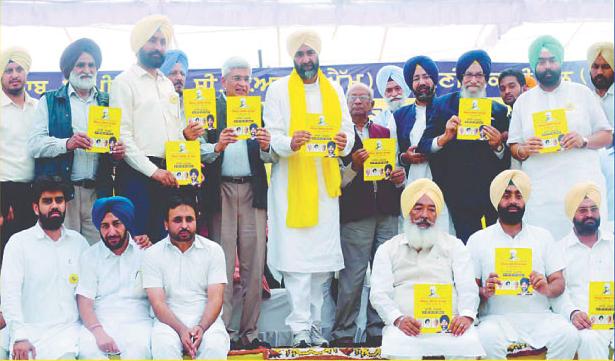
The newly formed Sanjha Morcha in Punjab, which has PPP (Peoples Party of Punjab), CPI, CPI (M) and SAD (Longowal) as partners, termed the SAD and Congress as "equally corrupt" and stressed on the need for a third front and a new beginning.The morcha released its common minimum programme (CMP) for the Punjab Assembly elections scheduled in February 2012, promising 5 lakh jobs for youths, a powerful Lokayukta to check corruption, providing “atta”, “dal” to the poor at nominal rates besides many other social welfare schemes. CPI M leaders Prakash Karat and Nilotpal Basu, CPI leader AB Bardhan, president of the Akali Dal (Longowal) Surjit Singh Barnala and president of the Peoples’ Party of Punjab Manpreet Singh Badal attended the rally.

Giving a call to overthrow SAD-BJP government and stop Congress from regaining power, the newly-formed Sanjha Morcha on Sunday kick started its election campaign in Dhudike in Moga in the presence of top national leaders of CPI and CPI(M).

The Morcha leaders also launched "Izzat bachao yatra" at martyr Lala Lajpat Rai's birthplace Dhudike on the occasion.

To tackle the problem of unemployment, the morcha promised to bring the Shaheed Bhagat Singh Rozgar Yojana for providing employment to 5 lakh youths. It also assured tax concessions for 15-20 years to encourage setting up of agro-based industries in the state. Filling vacant posts on a regular basis, providing loans on low interest rates to youths to start their own businesses and strengthening the MNREGA scheme would also be on the agenda, the leaders declared.

They said Baba Saheb Bhim Rao Ambedhkar Awaas Yojana would be set up for providing shelter to the weaker sections of society.

A six-member Lokayukta would be set up. The Vigilance Bureau would report to it and not to the Chief Minister, they stated. It would assure complete transparency and accountability of the civil and the police administration.

Bibi Nanki Girl Child Welfare Scheme would also be launched. Under the scheme, Rs 5,000 would be deposited in the account of each girl child for 20 years. The morcha leaders also announced that 25 government colleges, 25 hospitals and 200 schools would be opened during the first year of the morcha coming to power.

The morcha announced a populist measure to provide “atta” and “dal” at the rate of Rs 2 and Rs 3 per kilogram, respectively. They also promised to make Punjab a debt-free state, take scientific steps for sustainable agricultural growth, lower the rates of interest rates on loans for agriculture and allied practices, effectively control smuggling of drugs and bring in a new industrial policy.

CPI (M) general secretary Prakash Karat said: " What UPA is doing in the Centre, SAD is doing in Punjab, promoting corruption. This government, though never shies away in claiming farmer-friendly, but here in last four and half years 500 farmers have committed suicide and 45 lakh people are unemployed." Karat asked the people to give Sanjha Morcha a chance in the elections.

CPI general secretary AB Bardhan said: " Punjab always had shown the way to the nation and now again opportunity has come with Manpreet Badal for a change."

Bardhan said, if Congress is corrupt from head to toe, BJP is one step ahead and people now has started rising against it as Anna struggle has shown.

Peoples' party of Punjab chief and former Punjab finance minister Manpreet Badal in his address said: " It is the duty of everyone to uproot corruption and the corrupt regimes and for that we must take vow at this sacred place."

"Manpreet may not live forever but the path shown by martyrs should remain alive. I will keep fighting till my last breath and will never betray people," he said.

Earlier, former Punjab chief minister Surjit Singh Barnala too stressed the need to change the "anti-people SAD government."


Friday, November 4, 2011

6th State Conference of Jammu & Kashmir Kisan Tahreek


The two day state conference of J&K Kisan Tahreek was held at Khanabal (Ang) Kashmir on 29th and 30th of October 2011. The venue was chosen, keeping in view the historical importance of south Kashmir in relation to the struggle of peasantry during and immediately  after the autocratic rule of the Maharajas and their feudal chiefs. 

  The conference began with a huge public rally in the morning of 29th October at Dakbanglo Khanabal. The rally was addressed  by a number of prominent Kissan leaders, including the  state president and the general secretary . The lecture session was opened by com.M. Afzal,  the regional secretary Kashmir province. He underscored the importance of the kisan movement in J & K and highlighted the role of small and marginal farmers in the overall transformation of the society under the changed socio-economic scenario. Com. Abdul Hamid Wani, senior leader of the organization in his lecture described the kisan movement, a struggle which goes beyond the political borders and boundaries. Wani asserted that despite some set backs the ongoing struggle of the working class alone can help in uplifting the farmer community and enable them to live a dignified life.
 

The state general secretary, Malik Ghulam Nabi in his address underlined the challenges before the farmer community in the country, especially in J & K. He alleged that solutions and remedies proposed by the government for the problems faced by farmers, are practically proving counterproductive and against the interests of the poor and the marginal farmers.
 
The well known national level kisan leader, Com. Noorul Huda severally criticized the neo liberal economic policies of the UPA government and said that their policies, in essence however favour the corporate sector and the big business at the cost of a common farmer and other toiling masses. He further stressed, that small and marginal farmers cannot hope to gain anything substantial from the policies of the present  Central government.
 
Com. Sham Prassad, a senior working class leader from Jammu region, who greeted the participants highlighted some specific problems faced by the poor kisans.


Com. M.Y. Tarigami the well known working class leader of the state and MLA, while addressing the kisan rally deplored the attitude of the government vis-a-vis farmers and the other working masses. He said, even the farmer friendly schemes by the central government have failed and could not benefit the farmers who are facing great odds. This he said is mainly due to poor implementation of the said schemes. When the farmers make a demand for meager subsidies, the governemnt says, it has no money to support the kisans. The same government however never rethinks when it comes to increasing the salaries and perks of the ministers creating huge and unproductive expenditure.  Tarigami strongly advocated the withdrawal of AFSPA and said that various political parties and the govt. are enacting an unnecessary drama and are politicizing and issue which is essentially humanistic.
 
Com. Kishore Kumar, president of J & K Kissan Tehrik concluded the open session of the conference by thanking the participants for attending the rally during a very busy harvest season and some trying circumstances. He hoped that the Kisan movement will strengthen its roots in J & K and will launch an organized result oriented struggle in the coming days.


The delegate session of the conference started in the afternoon, wherein 210 delegates and observers hailing from 14 out of 22 districts of the State participated. Com Noorul Huda inaugurated the session while Malik Ghulam Nabi presented the  general secretary’s report. The presidential  address was read by the senior leader Com Abdul Hamid Wani. Twenty delegates took part in the discussion on the general secretary’s report. In all ten resolutions on different subjects, including resolutions on  Universalisation of PDS, Human rights violations, Strengthening of Panchyati  Raj Institutions, Land Acquisitions and the Redressal of problems of Gujjars and Bakarwals .

 
On 30th October after the reply of general secretary, the report was unanimously adopted. A 45 member State Working committee was elected with Com. Kishore Kumar as President, Malik Ghulam Nabi as General Secretary and Ghulam Rassol Ghanai as its treasurer.
 
In his concluding address Com M.Y.Tarigani emphasized the importance of building a strong Kisan movement in J & K. He stressed that the Kisan Movement alone can create a favourable atmosphere for the genuine democratic movement in the state.
          
Earlier on the eve of the conference a major rally was organized in which thousands of kisans coming from length and breadth of the State participated. The rally was addressed by AIKS leader Noorul -Huda, General Secretary Kisan Tehreek G. N. Malik, President Kisan Tehreek Kishore Kumar and veteran Kisan leader Abdul hamid Wani. Besides M Y Tarigami, State Secretary CPI(M) also addressed the rally.  Accusing the successive governments of disappointing the peasant community in J&K, they cautioned that the state could witness a strong protests if the farmers are deprived of their rights. They deplored that despite much publicized economic growth in the country, the poor, especially the small farmers have become poorer and their condition is getting miserable”. “If the situation continues to be like that, the day is not far when the farmers will come on streets to fight for their rights and we will witness serious protests,” they emphasized.


In his address State Secretary CPI (M) M Y Tarigami said that only a strong and organized Kisan movement can force the government to settle the issues of the peasantry.  Expressing disappointment over the rampant corruption in the state, Tarigami said, “The corruption is at its peak in the state. It is irony that the government has no money when it comes to subsidy and other benefits to farmers but for the salary hike of ministers and MLAs it has always enough funds in the Sate exchequer”. He said the corruption is so rampant that a common man cannot get ration card without giving bribe. “The schemes are formulated but are never implemented on ground. Even in the case of centrally sponsored schemes like NREGA, a villager has to pay a bribe and then get a job card,” he added.

Victory Rally By Anganwadi Mulazam Union Punjab


Victory rally was held at Mukatsar at the call of Anganwadi Mulazam Union Punjab CITU after 57 days long militant struggle. It is worth noting that the militant agitation of Aganwadi Workers Union Punjab compelled the Punjab government to double the state share of honorarium of Anganwadi workers and helpers. The government had to issue notification in this effect and enhanced honorarium of Anganwadi workers from 400 to 800 and honorarium of helpers from 200 to 400. From every corner of Punjab Anganwadi workers and helpers reached Mukatsar and marched to the venue of the rally in processions with the banners of their respective districts and red flags of CITU.

Over 1000 Anganwadi workers and helpers from districts Fatehgarh Sahib, Mohali, and Hoshiarpur reached Mukatsar at night on 29th October and camped in historical gurudwara at Mukatsar. It is at first time such a big rally of working women in Mukatsar. The rally presided over by state president of Anganwadi Mulazam Union Com. Usha Rani.

Addressing the rally Dr. Hemlata General Secretary of all India Federation of Anganwadi workers and helpers congratulated the Anganwadi workers and helpers of Punjab who forced the state government of Punjab to accept their just and genuine demands. During this militant relay hunger strike of 57 days the Anganwadi workers and helpers boldly braved police repression, inhuman torture in police custody and false police cases registered in various police stations under different sections. It goes to the credit of 27 days long militant struggle of Anganwadi workers and helpers under the guidance of Anganwadi Mulazam Union and CITU Punjab.

Dr. Hemlata further said that this struggle is neither first nor last one. For the remaining demands such as getting status and pay scales of government employees for Anganwadi workers and helpers; to get the ICDS regularized to get pension and all other benefits of social security and to get arears of the enhancement of monthly honorarium since April 2010.

Addressing the rally State General Secretary of CITU Com. Raghunath Singh congratulated the remarkable victory of Anganwadi Mulazam union Punjab. Condemning the Punjab government and Chandigarh Administration for registering false police cases against the leaders and active workers of Anganwadi Mulazam Union Punjab to suppress their peaceful agitation Com. Raghunath Singh warned that CITU would give befitting reply to the Ministers of Punjab government including the Chief Minister by launching mass campaign all over the state to expose the anti people and repressive policies of Akali-BJP Government.

He assured all kinds of cooperation to the agitations of the Anganwadi Mulazam Union Punjab. On this occasion Manpreet Singh Badal Chairman of newly formed United front of PPP, CPI(M), CPI, SAD(L) while congratulating the Anganwadi workers and helpers Punjab announced that when the united front comes to power it will immediately give honorarium to the Anganwadi workers and helpers on Haryana patern and also punish those police officials who lathi charged on the peaceful agitation of Anganwadi workers and helpers and curved democratic rights of the people. Anganwadi workers and helpers warmly welcomed this announcement made by Sardar Manpreet Singh Badal.

The rally was also addressed by Com. Vijay Mishra(President Punjab CITU), Com. Usha Rani President, Harjeet Kaur General Secretary, Subhash Rani cashier and Krishna Kumari vice president Anganwadi Mulazam Union Punjab, Com. Chander Shekhar Vice president CITU Punjab.

COUNTRYWIDE PREPARATIONS FOR “JAIL BHARO” ON 8TH NOVEMBER


Hectic preparations are going on in every industrial centre and other workplaces in the country to make the “Jail Bharo” agitation on 8th November, a great success with massive participation.

The call for the countrywide programme was given by the national convention organized by all the Central Trade Unions and National Federations of employees in various sectors, held in New Delhi on 7th September. The Central TUs involved in the campaign are BMS, INTUC, AITUC, HMS, CITU, AIUTUC, AICCTU, UTUC, TUCC, LPF and SEWA.

The present phase of agitation will see massive participation in all centres as preparatory campaigns have been conducted during the last few weeks.

State level conventions have been held in all the major states. Leadership level meetings at state and district level have been held to coordinate the preparations. Hand bills and posters have been published jointly by unions. Many of the unions have conducted campaign among workers in their area.

Though the Central Trade Unions have been agitating for the last two years, Govt of India has not done anything on these important demands. On the other hand, prices of petrol have been raised many times. Even now, in addition to further increase in prices of petrol, Govt of India wants to increase prices of diesel, LPG and kerosene. With prices of all essential items shooting up, the lives of working people have been put to peril.

With the UPA govt, going ahead with their neo liberal agenda, workers all over the country are agitated. Already Coal workers have gone on a countrywide strike. BSNL employees have declared a one-day strike against so called voluntary retirement scheme to send out nearly a lakh of workers. Bank employees are agitating over retrograde amendments on banking regulations. Countrywide agitations are being conducted by state and central Govt employees against denial of pension benefits. There have been struggles in different parts of the country against denial of trade union rights and against large scale vitimisations. It is in these circumstances, the joint movement is being organized.

The demands are not that of the workers and employees alone. These include the demands of all sections of ‘Aam Admi’ in the country. The demands for the court arrest programme are the following

• Concrete measures to contain price rise,

• Concrete measures for linkage of employment protection with the concession/incentive package offered to the entrepreneurs,

• Strict enforcement of all basic labour laws without any exception or exemption and stringent punitive measures for violation of labour laws,

• Universal social security cover for the unorganized sector workers without any restriction and creation of a National Social Security Fund with adequate resources in line with the recommendation of NCEUS and Parliamentary Standing Committee on Labour,

• Stoppage of disinvestment in central and state PSUs,

• No contractorization of permanent/ perennial nature and till then payment of wages and benefits to the contract workers at the same rate as available to regular workers of the industry/ establishment,

• Amendment of Minimum Wages Act to ensure universal coverage irrespective of the schedules and fixation of statutory minimum wage at not less than Rs 10,000/- per month with indexation,

• Remove all ceilings on payment and eligibility of Bonus, Provident Fund; Increase the quantum of gratuity,

• Assured Pension for all,

• Compulsory registration of trade unions within a period of 45 days and immediate ratification of the ILO Conventions nos 87 and 98

The convention on 7th September has also called upon the workers to be prepared for a countrywide general strike after the “Jail Bharo” agitation.

Unitedly Protest Petrol Price Hike

The Polit Bureau of the Communist Party of India (Marxist) has issued the following statement:

By announcing yet another price hike of petrol by Rs. 1.80 per litre, the UPA government has once again displayed its shocking callousness at the plight of the people. On the same day the price hike was announced the food inflation rate touched 12.21 per cent.
The government’s deregulation of petrol pricing is responsible for the fuelling of the price hike of essential commodities and inflation. The hoax of the pricing according to the market has been exposed as the international oil prices have fallen considerably in the recent period.
The Polit Bureau calls upon all its Party units to protest against this intolerable burden being imposed on the people. United protests should be launched including mass pickettting.